- Infrasync Technology Services
- Posts
- January 2026 - The $1.8 Trillion Challenge: How We Fought the 5 Forces of 2025
January 2026 - The $1.8 Trillion Challenge: How We Fought the 5 Forces of 2025

Andrew Swirsky
January 19, 2026

January 2026 • Number 29

It’s never been harder to run a water utility. We have five major forces that got worse in 2025, not better.
1 - Obsolete infrastructure
2 - Shrinking workforce
3 - Long term water supply
4 - Changing regulations
5 - Weather impacts
Each got worse in 2025…not better. All this is creating a financial crisis for public water utilities.
“The United States must invest roughly $3.4 trillion over 20 years (an annual capital need of $168 billion) to repair and modernize its water, wastewater, and stormwater systems. State and local sources are projected to cover $1.3 trillion. At current spending levels, the country will face a capital investment gap of $1.8 trillion by 2044—an annual shortfall of $88 billion, a figure less than what the government spends on Social Security in a month.”
Thankfully at Infrasync we worked hard to overcome these forces. At the beginning of 2025, there were just 2 of us at Infrasync. Myself and my brother Daniel Swirsky. Now we have grown to have 8 of us working together at Infraysnc to help our water utilities overcome their challenges. Since the beginning of the year we:
Helped a utility design and deploy a complex wastewater sensor network across 136 manholes to track inflow and infiltration and overflows
Audited an aging meter system to find a 12% failure rate in their current digital billing system, that lead to finding a leak losing hundreds of thousands of gallons a day
Prepared the engineering analysis and grant application for over $6mm in funding for a smart drinking water program
Designed and deployed a custom district metering area program and automated reporting to help a utility track water loss by area of the city
Planned out a combined physical and digital approach for drinking water loss to save a utility over $15mm over the program life cycle
It’s been quite the year but some of my favorite moments were:
Presenting at North Miami Beach about their obsolete AMI system and how digital improvements would save the city residents millions of gallons in lost water and give them accurate billing. |  North Miami Beach Public Utilities Commission |
Testifying at Texas legislature about the importance of digitizing our buried infrastructure locations and details to prevent pipeline accidents during construction. |  Texas House of Representatives |
Meeting up with the largest water and wastewater party in the world at WEFTEC with my team and so many great utility leaders. Lots of innovation and progress for digital infrastructure. |  Infrasync Team @ WEFTEC |
Watching Immokalee Water and Sewer District (one of our utility customers) present at WEFTEC about the success of their program. How they found illegal dumping and stopped it with digital infrastructure. |  Immokalee Water and Sewer District presentation at WEFTEC |
I’m very proud of our team. In 2025 we helped over 10 utilities with linking their physical and digital infrastructure. Our goal for 2026 is to help those original 10 continue on their journey and find another 10 to get started.
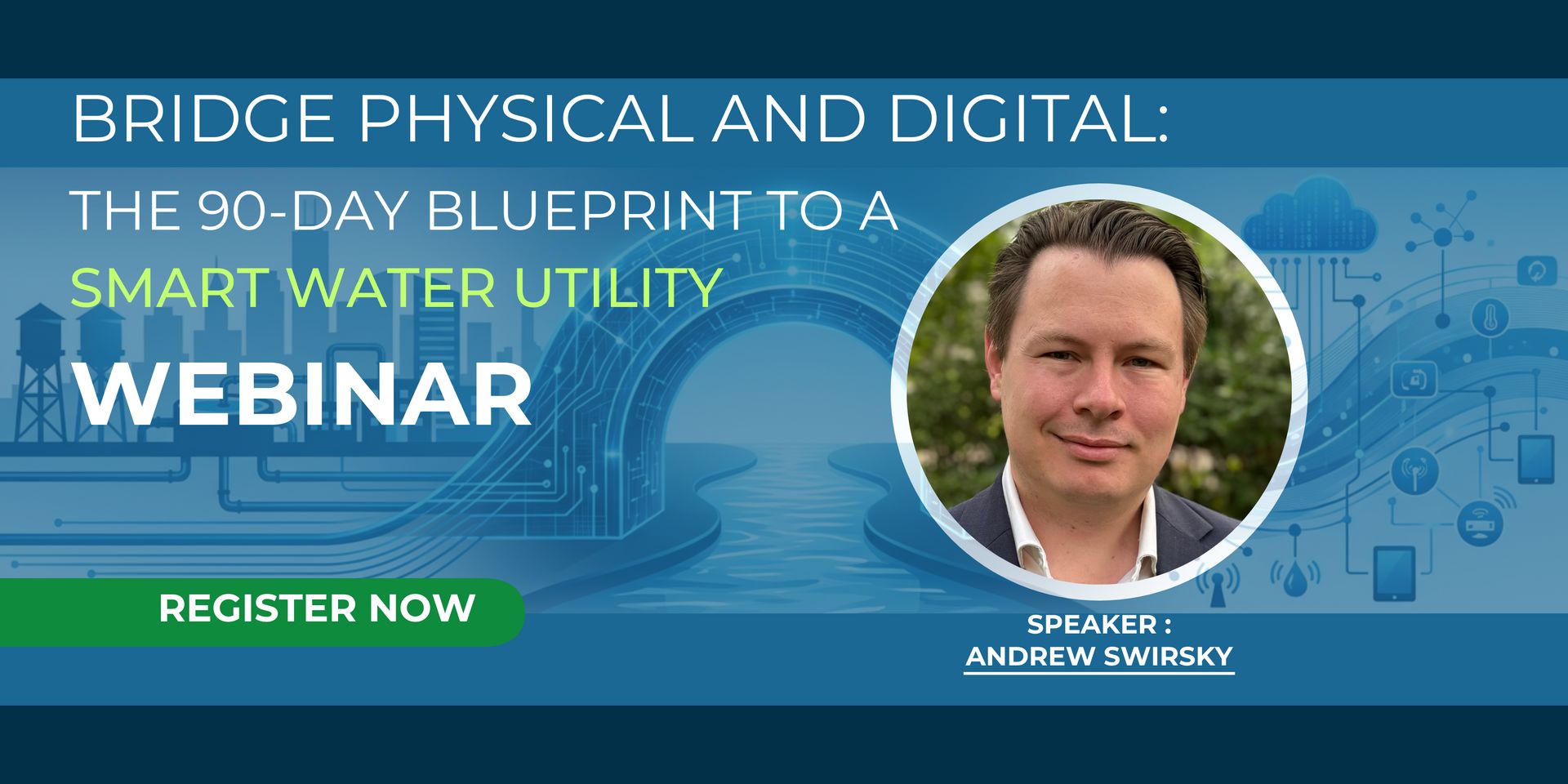
PS - To move from understanding these five forces to a practical response, join our live session on January 27, 2026, at 12:00 p.m. CT. We’ll walk through the three “smart utility” secrets, including a 90‑day implementation blueprint using the systems you already have. (Register below)
In case you missed it:
 |  |  |
  For anyone seeking authoritative insights into current trends and challenges in the water sector, I highly recommend exploring the American Water Works Association’s State of the Water Industry report. This comprehensive resource offers valuable data, expert analysis, and forward-looking perspectives essential for professionals and stakeholders in the water industry.  |   2025 FSAWWA Fall ConferenceAndrew Swirsky gave a session at the 2025 FSAWWA Fall Conference on December 1st on how to start with sensors for data, edge AI, wireless communications, databases, AI data clean, reporting, Digital Twins, and finally automated AI systems. Read about his insights |
Stay current with us, for a clear water future, until next time.